
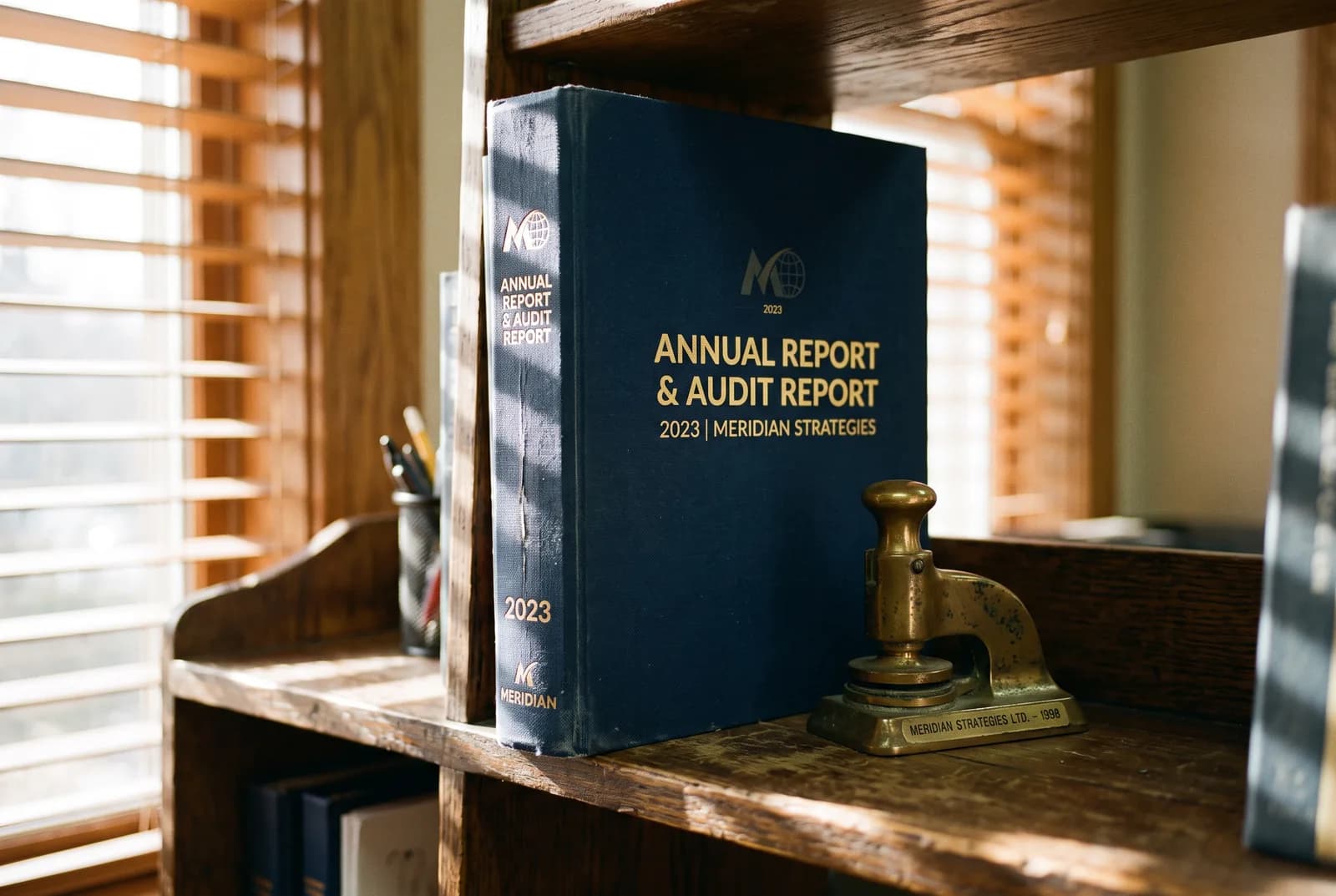
Statutory Audit in Raipur
Practice Index (9 Sections)
Statutory Audit in Raipur — Statutory Scope
Chartered Accountancy advisory and audit services in Raipur, Chhattisgarh & Kalahandi, Odisha. Direct partner supervision ensuring full compliance with ICAI standards and applicable statutes.
Every company incorporated under the Companies Act, 2013—whether Private Limited, One Person Company (OPC), Public Limited, or Section 8 Company—is legally mandated to get its financial statements audited by an independent practicing Chartered Accountant for every financial year, irrespective of turnover, capital, or trading volume.
The statutory auditor examines the balance sheet, profit and loss account, cash flow statement, and notes to accounts, providing an independent opinion on whether the financial statements give a true and fair view in conformity with the Indian Accounting Standards (Ind AS / AS) and Standards on Auditing (SAs) issued by the ICAI.
At Rabi Agrawal & Associates, we conduct comprehensive statutory audits for corporate entities across Raipur, Bhilai, Durg, Bilaspur, and Kalahandi (Odisha), ensuring full compliance with Section 143 reporting, CARO 2020 clauses, accounting software audit trail verification, and MCA Form AOC-4 e-filing.
Statutory Company Audit Standards & Reporting Framework
Corporate statutory audits must satisfy multiple statutory mandates under the Companies Act, 2013 and ICAI Standards on Auditing:
| Audit Mandate / Standard | Governing Section / Order | Applicability Criteria | Key Verification Scope | CA Reporting Deliverable |
|---|---|---|---|---|
| Independent Auditor's Report | Section 143(2) & 143(3) Companies Act 2013 | All Companies (Private, Public, OPC, Section 8) | True and fair view of Balance Sheet, P&L, Cash Flow & Notes | Main Audit Report with UDIN & Opinion (Unmodified/Modified) |
| CARO 2020 (Companies Auditor's Report Order) | Section 143(11) / MCA Order 2020 | Public Companies & Private Cos exceeding ₹1 Cr capital / ₹10 Cr turnover / ₹1 Cr debt | 21 specific clauses: Title deeds, inventory, loans, benami property, whistle-blower, going concern | CARO 2020 Annexure to Audit Report |
| Internal Financial Controls (IFCoFR) | Section 143(3)(i) & Rule 8A | Companies with turnover >= ₹50 Cr or aggregate borrowings >= ₹25 Cr | Adequacy and operating effectiveness of internal financial controls over financial reporting | Annexure on IFCoFR Controls Report |
| Audit Trail (Edit Log) Verification | Rule 11(g) Companies (Audit & Auditors) Rules 2014 | All Companies maintaining electronic accounting software | Verification that accounting software has edit log feature enabled throughout the year without tampering | Specific Rule 11(g) reporting in Auditor's Report |
| LLP Statutory Audit | Rule 24 LLP Rules 2009 | LLPs with turnover > ₹40 Lakhs OR partner contribution > ₹25 Lakhs | True and fair view of Statement of Account and Solvency (Form 8) | Independent Auditor's Report to Partners |
Audit Mandate / Standard: Independent Auditor's Report
Governing Section / Order: Section 143(2) & 143(3) Companies Act 2013
Applicability Criteria: All Companies (Private, Public, OPC, Section 8)
Key Verification Scope: True and fair view of Balance Sheet, P&L, Cash Flow & Notes
CA Reporting Deliverable: Main Audit Report with UDIN & Opinion (Unmodified/Modified)
Audit Mandate / Standard: CARO 2020 (Companies Auditor's Report Order)
Governing Section / Order: Section 143(11) / MCA Order 2020
Applicability Criteria: Public Companies & Private Cos exceeding ₹1 Cr capital / ₹10 Cr turnover / ₹1 Cr debt
Key Verification Scope: 21 specific clauses: Title deeds, inventory, loans, benami property, whistle-blower, going concern
CA Reporting Deliverable: CARO 2020 Annexure to Audit Report
Audit Mandate / Standard: Internal Financial Controls (IFCoFR)
Governing Section / Order: Section 143(3)(i) & Rule 8A
Applicability Criteria: Companies with turnover >= ₹50 Cr or aggregate borrowings >= ₹25 Cr
Key Verification Scope: Adequacy and operating effectiveness of internal financial controls over financial reporting
CA Reporting Deliverable: Annexure on IFCoFR Controls Report
Audit Mandate / Standard: Audit Trail (Edit Log) Verification
Governing Section / Order: Rule 11(g) Companies (Audit & Auditors) Rules 2014
Applicability Criteria: All Companies maintaining electronic accounting software
Key Verification Scope: Verification that accounting software has edit log feature enabled throughout the year without tampering
CA Reporting Deliverable: Specific Rule 11(g) reporting in Auditor's Report
Audit Mandate / Standard: LLP Statutory Audit
Governing Section / Order: Rule 24 LLP Rules 2009
Applicability Criteria: LLPs with turnover > ₹40 Lakhs OR partner contribution > ₹25 Lakhs
Key Verification Scope: True and fair view of Statement of Account and Solvency (Form 8)
CA Reporting Deliverable: Independent Auditor's Report to Partners
Who Must Have a Statutory Audit
Every Company Incorporated in India: There is zero threshold exemption. A company incorporated this financial year with zero revenue must still hold an audit, adopt accounts at AGM, and file Form AOC-4 with the ROC.
Qualified Independent CA: Only a practicing Chartered Accountant holding a valid Certificate of Practice (CoP) from ICAI can be appointed under Section 139.
LLP Thresholds: LLPs require statutory audit only when turnover crosses ₹40 Lakhs or partner contribution crosses ₹25 Lakhs.
Mandatory Audit Trail (Edit Log) Rule 11(g) Compliance
Since April 1, 2023, the Ministry of Corporate Affairs (MCA) requires every company using accounting software to maintain an unalterable audit trail (edit log) feature enabled throughout the entire financial year.
Under Rule 11(g), the statutory auditor must specifically state in the audit report whether the company used accounting software with an edit log feature operating without interruption, whether it recorded every transaction modification, and whether the log was retained for the statutory 8-year period.
This requirement cannot be fixed retrospectively. If the edit log was turned off during the year, the auditor is statutorily required to issue a qualified or modified remark under Rule 11(g).
The Corporate Statutory Audit Workflow & Timelines
The annual corporate audit cycle follows structured statutory milestones:
- 01Auditor Appointment (Form ADT-1): First auditor appointed by Board within 30 days of incorporation; subsequent auditors appointed at AGM for a 5-year tenure and intimated to ROC via Form ADT-1.
- 02Interim & Year-End Audit Testing: Vouching ledger balances, verifying bank confirmations (SA 505), physical stock verification, checking related-party transactions (Section 188), and testing IFCoFR controls.
- 03Signing of Audit Report: Issuing Independent Auditor's Report with 18-digit ICAI UDIN and CARO 2020 Annexure.
- 04Adoption at AGM: Financial statements presented to shareholders at Annual General Meeting (held on or before 30th September).
- 05Filing with ROC (AOC-4 & MGT-7): Filing audited accounts in Form AOC-4 (within 30 days of AGM) and Annual Return in Form MGT-7/7A (within 60 days of AGM).
Where Statutory Audits Frequently Encounter Deficiencies
- ✓Unidentified Related-Party Transactions: Undisclosed contracts or unsecured loans with directors, group entities, or relatives without Board/Shareholder approvals under Section 185/186/188.
- ✓Stock Valuation Non-Compliance: Lack of physical inventory count documentation or inconsistent valuation methods (AS-2 / Ind AS 2) in steel rolling mills, trading yards, and manufacturing facilities.
- ✓Statutory Dues Reconciliation: Unreconciled GST liability, delayed PF/ESIC deposits, and unremitted TDS amounts.
- ✓Inter-Corporate Loans & Deposits: Non-compliance with Section 73 (Acceptance of Deposits) and missing Form DPT-3 filings.
Scope of Practice Services by CA Rabi Agrawal & Associates
We provide comprehensive statutory audit services tailored to private limited companies, public unlisted companies, OPCs, and LLPs across Chhattisgarh and Odisha. Where statutory audit and tax audit (Section 44AB) both apply, our team coordinates both mandates simultaneously, eliminating duplicate efforts and delivering integrated financial reporting.
Consult CA in Raipur for Statutory Audit in Raipur
Visit our Head Office at GF-28, Shyam Plaza, Pandri, Raipur or connect directly with our Chartered Accountant partners for end-to-end advisory and statutory compliance.
Does a private limited company with zero turnover need a statutory audit?
What is CARO 2020 and which companies are exempt from it?
What is the audit trail (edit log) requirement under Rule 11(g)?
When is statutory audit mandatory for an LLP?
What are the ROC filing due dates after statutory audit?
Can statutory audit and tax audit be conducted by the same CA?
Compare Old vs New Tax Regime
Calculate your exact tax liability with ₹75k standard deduction, ₹12.75L zero-tax limit, and 80C/80D savings.
⚡ Open Free Tax Calculator →Partner-Led CA Consultation
Speak directly with CA Rabi Agrawal for expert advisory, audit certification, and compliance filing.
Office Locations:
• Raipur (Head Office):Shyam Plaza, Pandri →• Kalahandi (Branch): Main Road, Jayapatna🕒 Mon–Sat: 10:00 AM – 7:30 PM
Recommended Next Practice Areas for Your Business
Explore key regulatory registrations, recurring compliance filings, and government industrial subsidies related to this practice.
Tax Audit under Section 44AB
Explore Tax Audit under Section 44AB compliance, registration, and advisory requirements.
ROC Annual Compliance & Filing
Explore ROC Annual Compliance & Filing compliance, registration, and advisory requirements.
Internal Audit Services
Explore Internal Audit Services compliance, registration, and advisory requirements.
Discuss your tax, audit or compliance requirements with our partners.
Connect directly with Rabi Agrawal & Associatesfor statutory audit, taxation & corporate advisory.